Works2026
Spectrum
A work in four parts for ensemble, dialogue and 360° electronics, in which music, text and space merge into a single layered listening experience about perception, sensory processing and communication.
Listening beyondthe visible.
Instrumentation
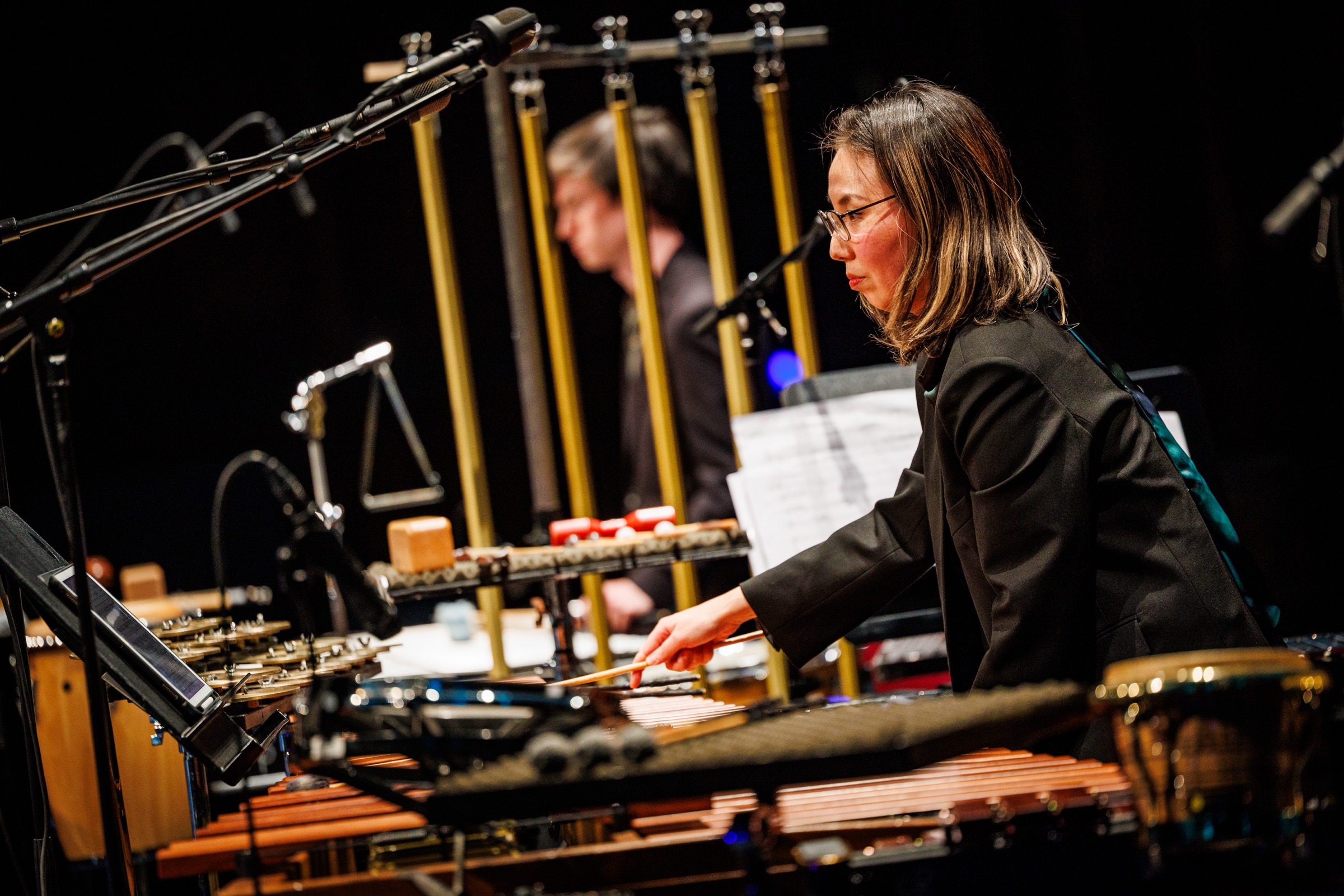
Percussion
2 players
- Sirens (2)
- Bongos
- Castanets
- Congas
- Snare drum
- Tom-toms (2)
- Roto-tom
- Triangle
- Shaker
- Wood blocks
- Crotales
- Tubular bells
- Glockenspiel (E8)
- Xylophone
- Marimba
- Vibraphone
Strings
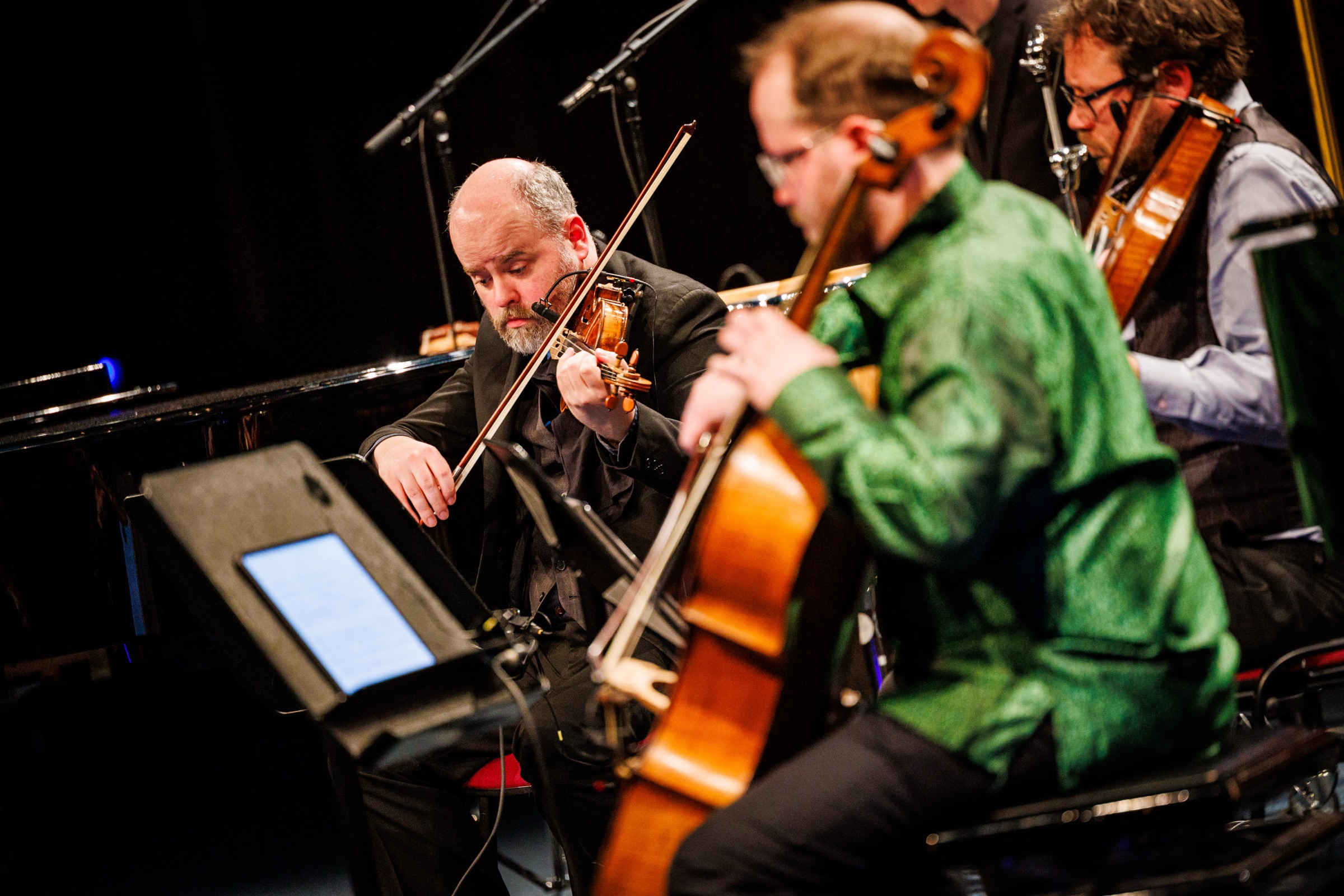
String quartet
- Violin I
- Violin II
- Viola
- Cello
Keyboards
2 pianos, a quarter-tone apart
- Piano 1 — A4 = 440 Hz
- Piano 2 — A4 ≈ 427.47 Hz
Electronics
Two fixed-media layers and live processing
- M.1 — dialogue / fixed-media layer
- M.2 — soundscape / processing layer
- Live electronics
Segers wrote Spectrum from his own experience of the autism spectrum, examining how perception, sensory processing and communication take shape from the inside — and how they do not always translate to the world outside.
Spectrum is a composition in which music, dialogue and electronics form a single experience, letting the audience feel from the inside how stimuli, attention, overload, miscommunication and clarity can alternate — or obstruct one another. The music functions both as illustration and as translation: dialogue and music either complement each other or get in each other's way.
My work starts from perception: what it feels like to experience something, not only what happens. I try to make states visible that normally remain invisible. At times the dialogue is a collage, at other times a monologue; at specific moments the tone is deliberately tongue-in-cheek.
Electronics are, in some places, an added flavour, but first and foremost they carry the intensity and immersiveness of the message. They reframe space and perspective — bringing the background forward, making proximity feel immersive, and placing the audience inside the same sensory world.
Like the autism spectrum itself, Spectrum uses a wide range of styles and ideas: more or less emerging from the same source, but realised in different ways. Sometimes it develops material further; at other times it introduces deliberate stylistic ruptures — in service of the message, of irony, or of the distant connections that autistic people can make.
“The motivation behind Spectrum is that the public image of autism is still often caricatural — as if you can always see that someone is autistic, as if autistic people cannot behave normally, as if we are all Rain Man. For many people this is simply not true: on the outside they may seem to keep up, but on the inside every situation demands extra work — filtering, masking, correcting, repairing misunderstandings internally, trying to read others — resulting in tension and exhaustion that no one sees. Spectrum makes that inner world audible and tangible, not by telling the audience what to feel, but by building a situation in which feeling becomes almost unavoidable. Behaviour often stems from overload and survival strategies, not from unwillingness. If the audience leaves judging a little less quickly and with a little more openness, Spectrum has already done what it needs to do.”
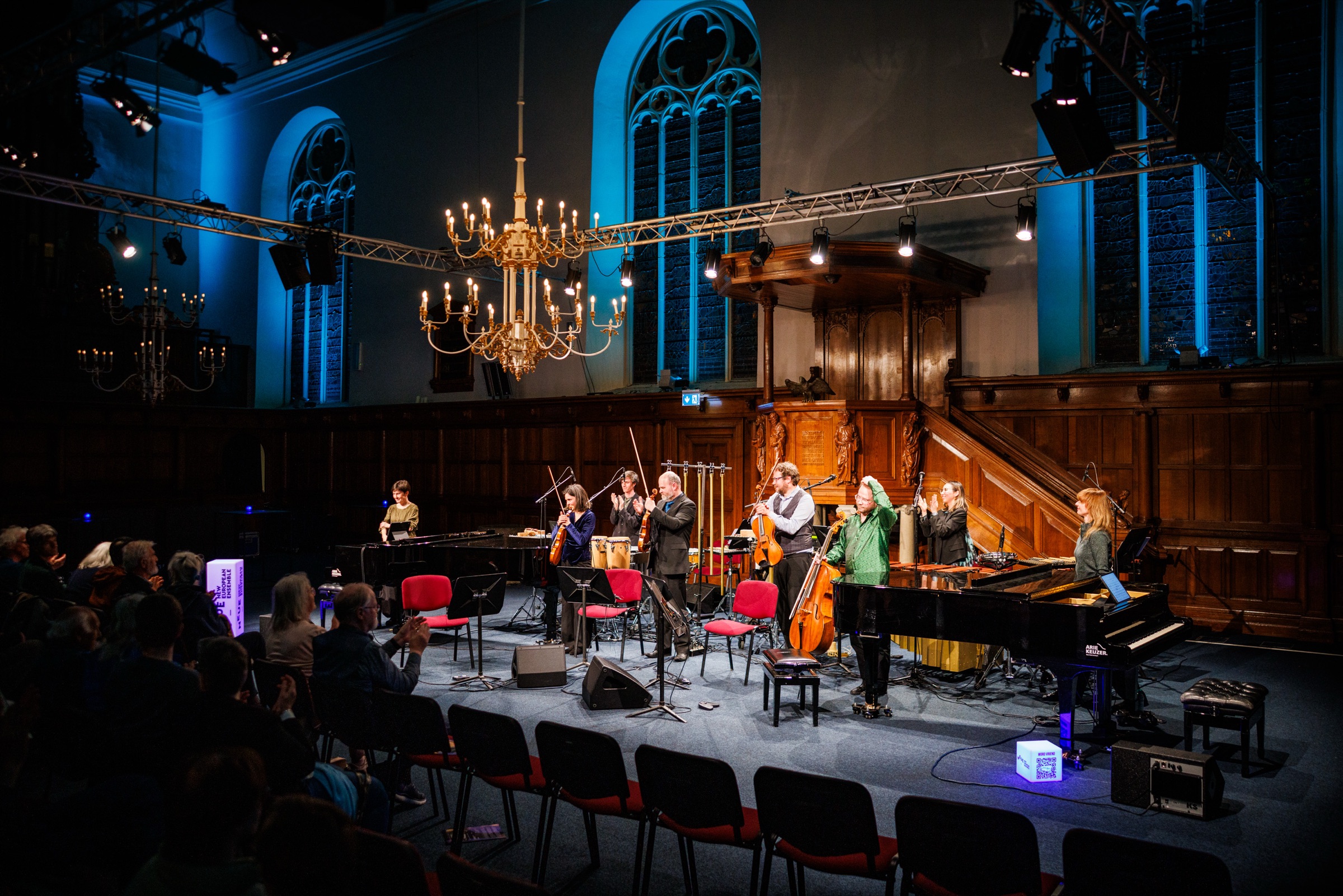
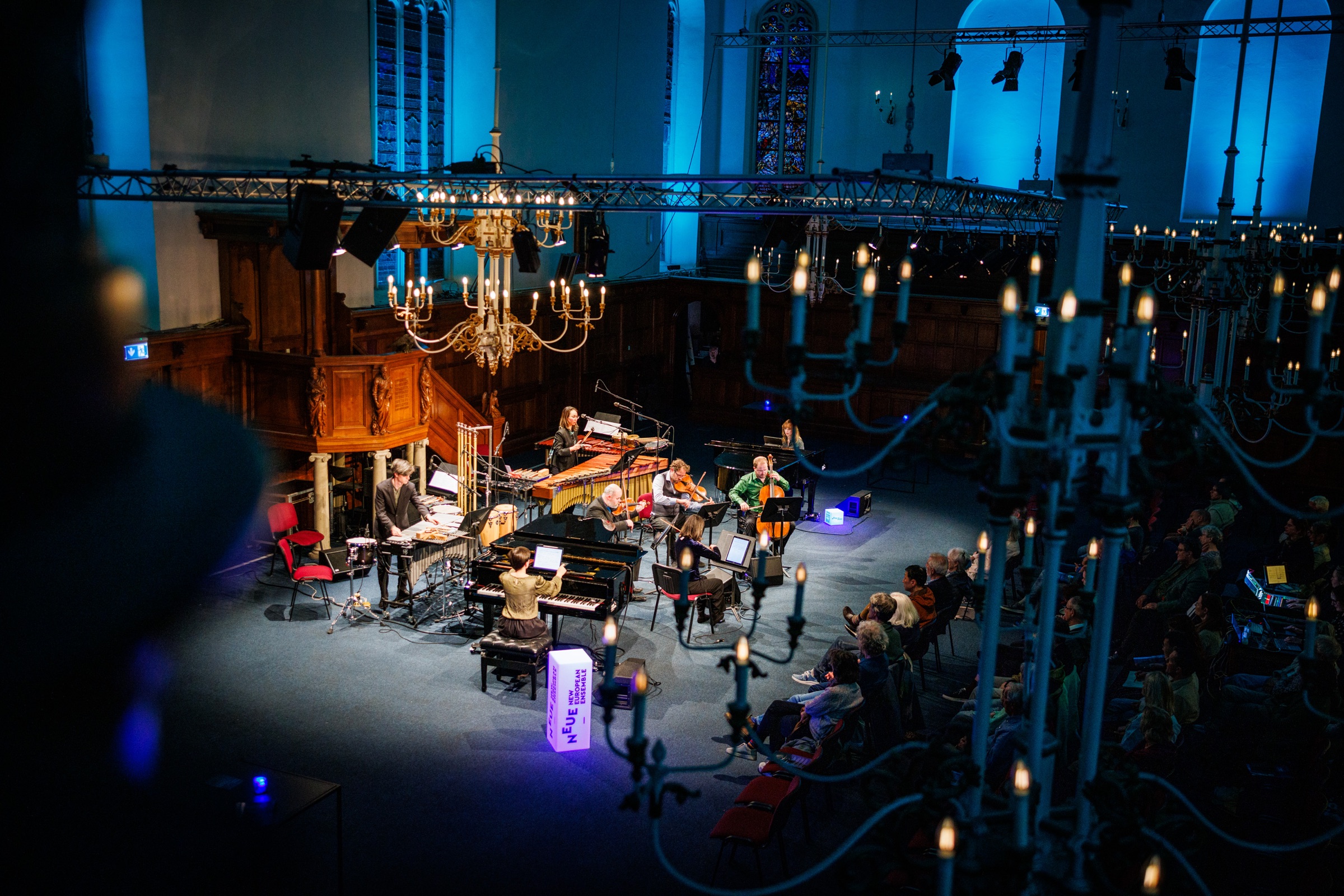
Four movements
- I
Reflections, Uncertainty, Drowning
The work begins in darkness: no lights, only sound. The piano drifts in a 360° space, like an inner world you cannot step out of. This part turns on doubt, fear, and the constant measuring, adjusting and justifying of oneself. A half-whispered dialogue gathers more and more voices until, at section E, it becomes a fully inner monologue drawn from the collective thoughts of many autistic people — a collage surrounding the audience, thoughts that keep running in the background but that nobody hears. Music is absent here, and the isolation sharpens. The drowning is about not being heard, and about the expectations and misunderstandings that arise when an autistic person appears, from the outside, to function normally.
- II
Irritation, Quirks, Support
The perspective becomes sharper and more grounded. It focuses on the irritations that arise in everyday interaction with neurotypical people, on habits that may seem unusual from the outside, and on the support some of us receive in the form of practical coaching.
- III
Stages of Overstimulation
Escalation, in three main phases with a number of experiences in between. The music is episodic here rather than one continuous whole. Dialogue explaining what is happening is disrupted by intrusive environmental sound; the background becomes so present that it grows hard to decide where to place your attention. Electronics and spatial design are essential in this part: overstimulation is not only about loudness — sometimes it is — but about inescapability, rapid switching, and the attempt to suppress stimuli. The electronics can slowly skew perception when something is experienced as difficult.
- IV
Attainment, Me, Pride
After the intensity of part 3, part 4 is more spacious, with more back-and-forth between dialogue and music as the material — and the audience — re-orders itself. Attainment is both subject and direction: the core problem of talking past each other is not explained in depth but made audible, and given room to tip towards understanding. The work ends deliberately in a more positive register: not a happy ending, but clarity and pride that can exist alongside complexity, with room for the positive sides of autism.
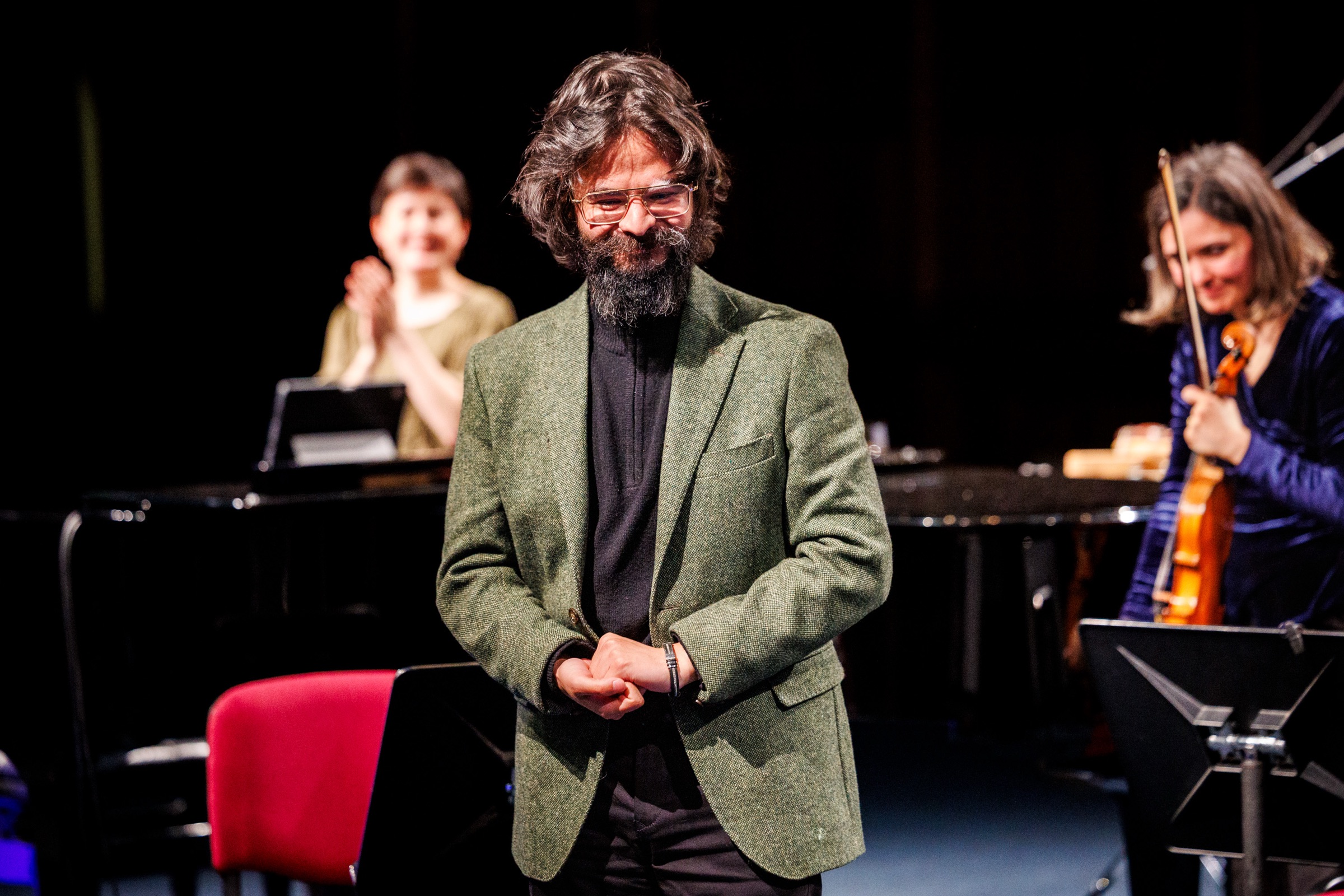
Photography — Veerle Bastiaanssen
Credits
- Year
- 2026
- Form
- Music / text / electronics
- Structure
- Four movements
- Scoring
- Percussion (2 players), 2 pianos, violin I + II, viola, cello, electronics
- Tuning
- 24-EDO — two pianos a quarter-tone apart
- Sound
- Multichannel, 5.1 or 5.2, with live electronics
- Presented by
- New European Ensemble — Mavericks
- Presentation
- Mike Boddé
- Performances
- 16 — 18 April 2026
- Cities
- Enschede / Tilburg / The Hague
- Photography
- Veerle Bastiaanssen